Start with a story you can finish
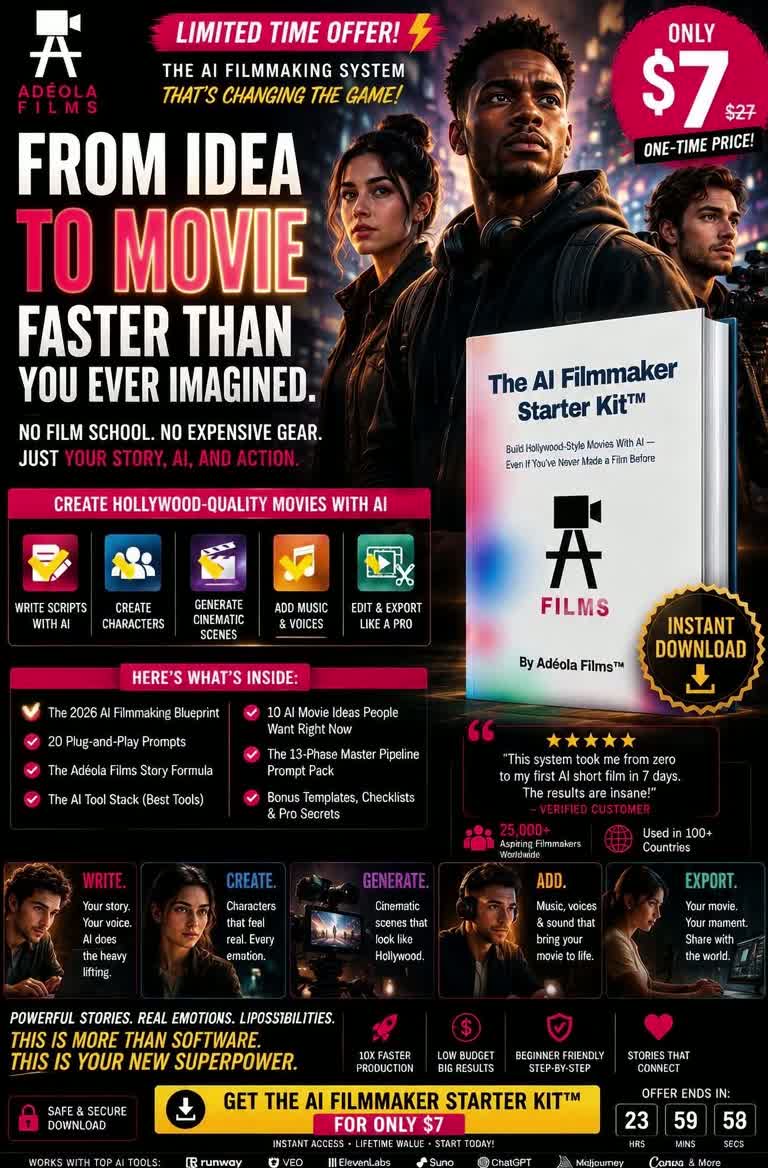
The ADEOLA FILMS AI Filmmaker Playbook organizes work around story, character and world bibles, shot planning, generation modes, sound, editing and continuity. It is a guide to directing your decisions, not a promise that software will make the film for you.
Write one sentence each for a character's goal, obstacle, choice and consequence. Then outline a short scene. Limit the number of people, settings and visual changes until the sequence feels clear on paper.
Build a small production plan
Use the Playbook's character and world bibles to list what must stay consistent. Turn the scene into a shot list: what does each image reveal, and what must the audience understand before the next one? Test a few short shots before committing to a longer sequence.
Whether you use a phone, drawings, recorded footage or an AI-assisted image, compare the result against your story and continuity notes. A study of R&D teams found that constraints can help or hinder creativity depending on context [1]; a small shot list is a planning device, not a scientifically validated formula for better films.
- Draft a one-page scene and a short shot list.
- Keep a record of character, setting and prop details across shots.
- Edit for clarity and pacing; check sound before calling the work finished.
Count the real costs
Little or no cash budget does not mean zero cost. Account for time, access, data, equipment, collaborators and any tool fees before you start. Use material you have rights to use and obtain permission for identifiable people and voices. The U.S. Copyright Office explains that human authorship matters when assessing copyright claims involving AI-generated material [2]; local law and individual platform terms also need checking.
Finish a small piece, review it with people you trust, and revise the next one. The Playbook's central principle remains the same at any budget: story first, continuity by design, direct the shot.